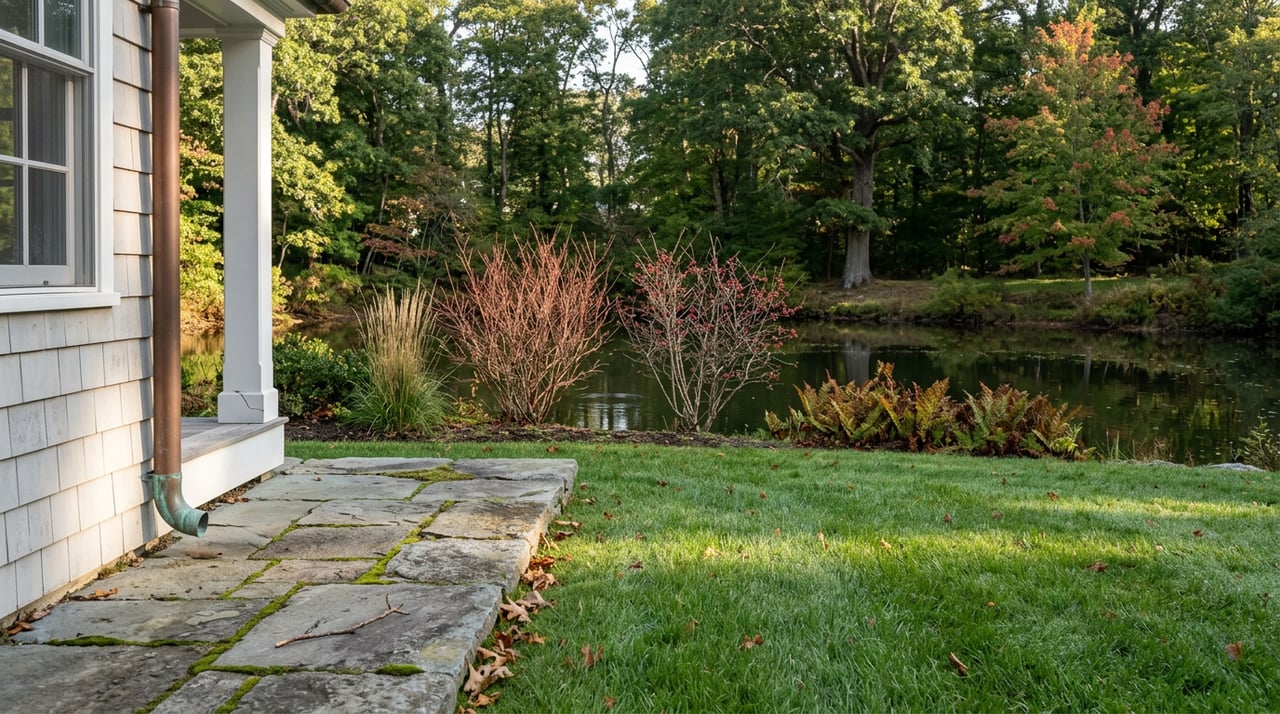
Drive down High Mountain Road today and the gate at the G. Thomas Donch Nature Preserve sits open, the way it has for about a year now. Cars park in the lot itself instead of lining Reservoir Drive the way they had to for a stretch. It looks like nothing ever happened here. That's worth pausing on, because for a long while it very much did not look like this.
The borough's own nature preserve page confirms something a lot of residents still don't act on: you can pull in, park, unload a kayak, and walk straight to the water. During the period when the access road was closed for culvert repair, that simple sequence didn't exist. Visitors parked on the street, crossed High Mountain Road on foot, and carried boats in by hand. The workaround mattered enough that Ramsey Outdoor, which runs the paddlesport concession there, had to post its own step by step directions just to get people to the launch. The real story a year later isn't that the gate reopened. It's that the closure lasted long enough to reroute where people spent their Saturday mornings, and a few of those rerouted habits are worth keeping even now that the shortcut is back.
What Was Actually Different, and What Changed
It helps to see the two versions side by side, because the gap between them is bigger than "the road was closed."
| During the closure | Now | |
|---|---|---|
| Getting to the water | Park on Reservoir Drive, cross High Mountain Road on foot | Drive in, park in the preserve's own lot |
| Kayaks and canoes | Hand-carried from the street to the launch | Rented and launched right at the concession |
| Ramsey Outdoor hours | Weekends and holidays only, 9 a.m. to 6 p.m. | Monday through Thursday 10 a.m. to 4 p.m., Friday through Sunday 9 a.m. to 6 p.m. |
That third row is the one people tend to miss. A rental window limited to weekends and holidays meant the preserve was generally a weekend amenity for anyone who wanted a boat rather than just a walk. The weekday rental window makes a Tuesday paddle a normal option again, and that expanded schedule has been in place for about a year now. The Shoreline Loop and Island Bridge Trail, the preserve's two named routes around the 75 acre lake, were walkable the whole time. The paddling half of the property is what actually came back.
Where the Slack Went
None of this means Franklin Lakes went quiet while the road was closed. It means the demand for a lake, a paddle, a Saturday outdoors moved somewhere else for a while, and a few of those destinations got stronger because of it.
Lorrimer Sanctuary picked up real momentum. The 14 acre property on Ewing Avenue, given to New Jersey Audubon by Lucine Lorrimer in 1956, is running its Summer Sundays drop-in program every week again this year, alongside its long-running summer firefly nights and monarch butterfly tagging. This isn't a sleepy consolation prize for the years the preserve was hard to reach. New Jersey Audubon has pointed to a $1 million gift from the Winifred M. and George P. Pitkin Foundation to Lorrimer, the largest single donation the sanctuary has received, funding an expansion the sanctuary's director has described as putting the site on stronger footing than it's had in years. If you only ever thought of Lorrimer as the smaller nature spot down the road from the reservoir, that's worth revisiting.
Saturday mornings moved to Veterans Plaza. The Franklin Lakes Farmers & Artisan Market runs every Saturday from 10 a.m. to 2 p.m. through November 21, with produce, baked goods, and local crafts filling the plaza at 745 Franklin Avenue. It's an easier habit to build than a drive out to the preserve, and it doesn't depend on parking lot access or rental hours. For a household that wasn't going to carry a kayak across High Mountain Road anyway, the market became the default outdoor Saturday.
A patch of borough land turned into something new. The Organic Community Garden opened last spring with a ceremony that pulled in students from Franklin Avenue Middle School, local Girl Scout troops, and the Interact Club from Ramapo High School. It's a small addition, a few garden beds on public land, but it's the kind of civic project that only shows up when a town's outdoor life is being actively used and expanded, not just maintained.
Keep Both Habits
The mistake would be treating the preserve's reopening as a reset button, as if the market and Lorrimer's Sunday programs were placeholders that stopped mattering once the gate came back open. They weren't placeholders. They're additions to the rotation, not substitutes for it. Franklin Lakes now has a working nature preserve with full paddling hours, a sanctuary that landed the largest gift in its history and is running weekly programs to match, a Saturday market through late November, and a community garden that's barely a year old. That's more going on outdoors on a given weekend than the town had before the culvert work started, not less.
If you never got around to trying the Farmers & Artisan Market or a Lorrimer Summer Sunday because the preserve wasn't fully accessible, the excuse has been gone for a year but the reasons to go haven't changed. And if it's been a while since you've actually paddled the Donch Nature Preserve itself, the Tuesday and Wednesday daytime slots that used to be off the table are open again, no hand-carrying required.
This is the kind of texture that doesn't show up in a listing description or a market report, but it's exactly what makes a town feel lived in rather than just located. For more on what makes this particular corner of Bergen County distinct, the Reitz Group's Franklin Lakes neighborhood page rounds out the picture with the lake communities, preserves, and civic life that define it.
If you're weighing a move within Franklin Lakes, or wondering what a property near any of these spots is actually worth in today's market, The Reitz Group blends that kind of ground-level knowledge with Christie's International Real Estate reach. Request Your Instant Home Valuation to start the conversation.